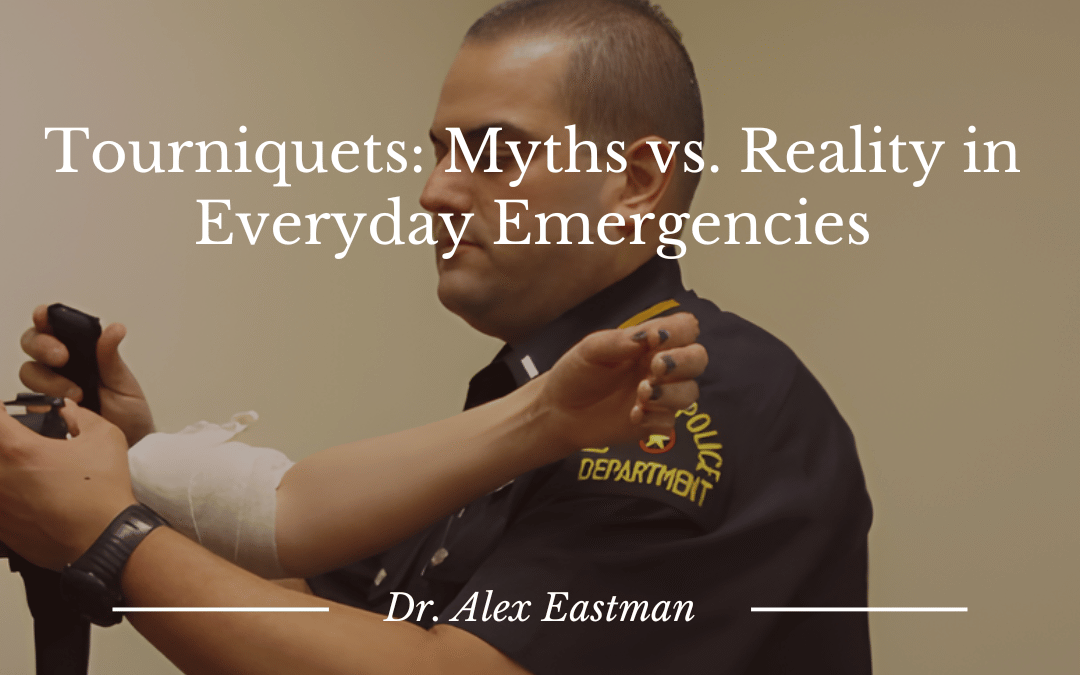
For most of my career, I have lived at the intersection of law enforcement and trauma surgery. Working with the Dallas Police Department and in the operating room, I have seen one simple tool decide whether a patient lives to tell the story or becomes another statistic: the tourniquet. My perspective is shaped not only by my time in the trauma bay, but by years helping build the Dallas Police Department’s medical response capability and training officers and citizens in bleeding control.
Despite the evidence and years of success in combat and civilian settings, old myths about tourniquets refuse to die. I still meet people who are more afraid of the tourniquet than of the bleeding itself. That fear is not just outdated. It is dangerous. In after action reviews of mass casualty incidents I have worked, I have seen clearly that hesitation to use a tourniquet can be the difference between a close call and a funeral. If you want a broader look at how timing shapes outcomes, read The Minutes That Matter Bridging the Prehospital Gap.
Let us clear up some of the most common myths and talk about how tourniquets can be used safely in everyday emergencies. If you want to go deeper after you read this, I recommend visiting the national Stop the Bleed program at StopTheBleed.org and the American College of Surgeons bleeding control resources at facs.org/bleedingcontrol.
The first myth is that a tourniquet will automatically cause someone to lose their arm or leg. This belief comes from very old data and experiences that do not reflect modern practice. During earlier wars, tourniquets were often applied with poor technique, left on for very long periods, and used without the benefit of rapid evacuation or modern critical care. Today we have better materials, better training, and faster access to hospitals. The modern evidence, including work published in Annals of Surgery by Kragh and colleagues on emergency tourniquet use (read the abstract here), shows that when a commercial tourniquet is applied correctly and removed within a reasonable time frame, the risk of permanent damage is very low compared with the risk of bleeding to death.
In fact, I would put it bluntly. I can usually fix an arm. I cannot fix dead. That is not just a line. It comes from standing at the bedside of officers, victims, and bystanders whose lives were saved because someone in the field tightened a tourniquet instead of worrying about worst case scenarios they had heard about in the past.
The second myth is that tourniquets are only for the military or for SWAT teams. That idea has been disproven on our streets again and again. Severe bleeding does not wait for a medic to arrive. It happens in car crashes, workplace injuries, power tool accidents, home projects, and public violence. I have cared for victims in Dallas whose survival can be traced directly to a bystander or an officer who was willing to act decisively with a tourniquet. The battlefield showed us what works through programs like Tactical Combat Casualty Care and the Committee on Tactical Combat Casualty Care, but the lessons now belong in every neighborhood and every patrol car.
Another common myth is that you should use a tourniquet only as an absolute last resort, after trying everything else. The problem with that advice is that uncontrolled arterial bleeding can kill in a matter of minutes. If blood is pouring, pooling on the ground, or soaking through clothing rapidly, and it is coming from an arm or a leg, you do not have time to experiment with half measures. Firm direct pressure is always a good first step, but if that is not controlling the bleeding and you have a tourniquet available, you should not delay. National guidance, including the Hartford Consensus and bleeding control recommendations from the American College of Surgeons, supports early, decisive use when bleeding is life threatening. For additional context on how those ideas were shaped and applied, see Lessons From the Hartford Consensus.
People also worry that they might put a tourniquet on “wrong” and cause more harm than good. Proper training is important, and I strongly encourage every citizen to take a Stop the Bleed class or similar course. However, the biggest mistake I see is not that a tourniquet is slightly off in placement, but that it is applied too loosely or not used at all. A tourniquet has to be high and tight on the limb and turned until the bleeding actually stops. It will hurt. That pain is a sign that you are occluding blood flow, which is exactly what you need to do when someone is losing their life onto the sidewalk. I have watched officers, after just a few hours of hands on training, perform these steps flawlessly under real pressure on our city streets.
There is also the myth that improvised tourniquets are just as good as commercial ones. In the hospital and in the field, we see a big difference. A purpose built, windlass style tourniquet is designed to apply enough pressure evenly and stay locked in place. A belt or a piece of cloth is often too wide, too stretchy, or too hard to tighten fully. If it is all you have, use it and do your best, but understand that carrying a real tourniquet is like carrying a fire extinguisher. You hope you never need it, but if you do, you will want the right tool in your hand.
So how can you use a tourniquet safely in a real world emergency? First, recognize life threatening bleeding. Look for blood that is spurting, pooling, or soaking through dressings quickly. Second, if the bleeding is from an arm or a leg and direct pressure is not enough, place a commercial tourniquet a few inches above the wound, closer to the torso, avoiding joints. Tighten the windlass until the bleeding stops and secure it. Note the time if you can, then keep the person warm and still until medical help arrives. Do not remove the tourniquet in the field. That is a decision for trained medical professionals.
The reality is that modern tourniquet use is one of the great public health success stories of the past two decades. It is simple, it is proven, and it is within the grasp of everyday citizens. The myths around it are based on fear and outdated information. The truth is that when used correctly, a tourniquet is far more likely to save a limb and a life than to cost one. From my vantage point working with national efforts like Stop the Bleed and local initiatives in Dallas, I have seen how putting tourniquets and training into the hands of ordinary people changes outcomes across an entire community.
If you take nothing else from my experience in trauma and law enforcement, let it be this. Severe bleeding is a true medical emergency, and time is your enemy. Having a tourniquet nearby and knowing how to use it safely can turn a bystander into the person who makes sure someone gets home to their family. That is a responsibility worth preparing for.