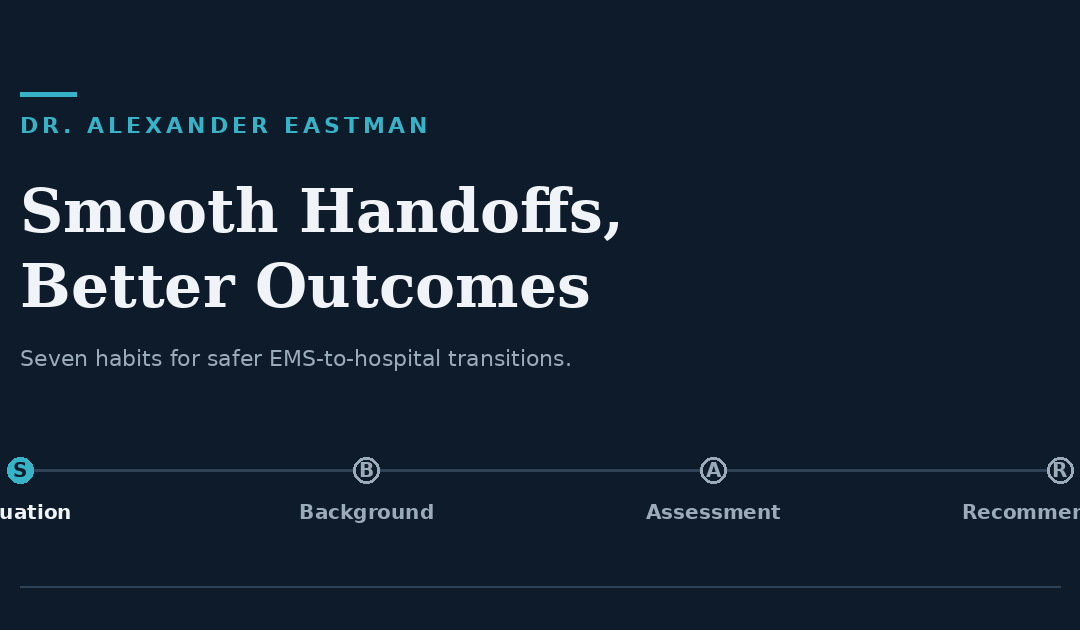
The moments between an ambulance arrival and the start of definitive hospital treatment are some of the most critical in trauma care. Over more than twenty years working alongside EMS crews, SWAT medics, and hospital teams in Dallas, Dr. Alexander Eastman has seen firsthand how a smooth handoff can shape a patient’s outcome. When information flows clearly and efficiently, teams reduce errors, speed up care, and improve outcomes.
The practical habits below have helped the teams Eastman has worked with over the years. They are not complicated new protocols. They are straightforward habits that anyone on either side of the handoff can put into practice.
1. Use a standardized structure like SBAR
Start with the SBAR format: Situation, Background, Assessment, and Recommendation. This structure keeps everyone aligned. EMS providers can quickly tell the receiving team the patient’s current status, what happened, vital signs and trends, and what they recommend next. In Eastman’s experience, teams that default to SBAR waste far less time clarifying details once the patient is in the bay.
2. Make the handoff face to face whenever possible
Deliver verbal reports in person whenever possible. Face-to-face handoffs work better than radio or written summaries alone. The EMS crew, the emergency department nurse, and the physician can all hear the same information at the same time, so the team can answer questions immediately. Subtle cues, such as the tone of the paramedic’s voice or a quick look at the patient’s appearance, often add context that numbers on a page cannot convey.
3. Bring the right documents and share them early
A simple one-page run sheet or electronic patient care report, handed over at the start of the handoff, saves everyone time. It should include the patient’s name, or age and gender if unknown, the mechanism of injury or illness, key vital signs, treatments already given, and any allergies or medications. When the hospital team has this information right away, they can prepare equipment or medications instead of asking for the same details twice.
4. Speak the same language
EMS and hospital teams sometimes use slightly different terms for the same thing. Taking a minute during training or shift change to align on common terminology, such as how teams describe airway status or hemorrhage control, prevents small misunderstandings from becoming big delays. Eastman has found that joint training sessions between local EMS agencies and the trauma center pay off every day.
5. Confirm understanding before the EMS crew leaves
A quick readback or teachback closes the loop. The receiving nurse or physician repeats the key points they heard, and the EMS provider confirms or corrects them. This closed-loop communication takes about thirty seconds and catches errors before they matter. In high-volume trauma centers, this simple step can prevent medication mix-ups or missed injuries.
6. Debrief when things do not go perfectly
Not every handoff is flawless. When a breakdown happens, maybe information was missed or a piece of equipment was not ready, Eastman encourages teams to treat it as a learning opportunity instead of assigning blame. Short, blame-free debriefs that ask what worked well and what could be done better next time build better habits for the next call.
7. Keep the patient at the center of the conversation
It is easy to focus on the mechanics of the handoff. Even so, Eastman encourages teams to keep the patient’s story front and center. A quick introduction, such as “This is Mr. Smith, 52, involved in a motor vehicle collision,” humanizes the moment and reminds everyone why the details matter.
Good communication between EMS and hospital teams is not flashy work, but it is some of the most important work in trauma care. Over the years, Eastman has watched these small habits save minutes that translate into lives saved and complications avoided. Whether someone is a paramedic, an emergency nurse, a physician, or part of the support staff, taking a moment to refine how care is handed off pays dividends for every patient who comes through the door.
Readers who work in EMS or emergency care are welcome to share the handoff practices that work in their systems in the comments.
Disclaimer: This article is for educational and informational purposes only and reflects Dr. Eastman’s personal experiences and opinions. It is not intended to provide medical advice or replace professional clinical judgment. Always follow your organization’s protocols and consult qualified healthcare professionals regarding specific patient care situations. Views expressed here do not necessarily represent those of his affiliated hospitals, academic institutions, or law enforcement agencies.